So, everyone’s talking about the upcoming 2026 China Import and Export Fair, right? Mwm Spare Parts is gearing up to really make a splash there. The event runs from April 15 to May 5 and covers all sorts of sectors—think advanced manufacturing, machinery, you name it. They’re pretty excited to show off their innovative solutions to a global crowd.
One cool thing this time around is how they're using AI-powered features to improve the buying experience. It’s pretty handy—buyers can now filter suppliers based on specific stuff like ISO and CE certifications. Makes it way easier to find Mwm Spare Parts among the massive 1.55 million square meters of exhibition space—trust me, that’s a lot to navigate!
Of course, Mwm Spare Parts is set on impressing visitors, but they’re also aware of some hurdles. Meeting international standards isn’t always easy, and understanding what different markets really need can get pretty complex. But honestly, being part of this fair gives them a chance to confront those challenges head-on. Plus, chatting face-to-face with buyers really beats just messaging online—there’s something about that personal touch that can’t be replaced.

The automotive industry relies heavily on spare parts. They ensure vehicle safety and longevity. Mwm spare parts play a crucial role here. A report by Grand View Research highlights that the global automotive spare parts market is expected to reach $1 trillion by 2025. This growth underscores the demand for quality parts.
However, not all spare parts meet industry standards. Some may lack certification or quality assurance. This raises concerns among manufacturers and consumers alike. Ship Engine Spare Parts, for instance, require precise specifications to function correctly. Without adherence to these standards, efficiency could diminish, leading to potential risks.
Cost-effectiveness is another issue. Many manufacturers opt for cheaper parts. They might save money initially, but the long-term effects could be detrimental. Repair costs can escalate quickly if lower-quality parts fail. This dilemma highlights the importance of investing in reliable spare parts. The consequences of neglecting quality threaten overall vehicle performance and safety.
The spare parts market is evolving rapidly, especially during major events like the China Import and Export Fair. Recent data suggests a projected growth rate of 5% annually for the global spare parts market, indicating increasing demand across various sectors. Notably, the Main Engine Spare Parts segment is expected to see a significant uptick. This aligns with the industry's adaptability to environmental regulations and technological advancements.
Amid this growth, supply chain disruptions remain a concern. Recent reports highlighted that about 30% of suppliers are still facing delays in production. Many spare parts manufacturers struggle to maintain inventory levels, impacting customer satisfaction. This inconsistency may push buyers to explore alternative suppliers, which could reshape market dynamics.
Trends observed at the fair reflected innovation and sustainability. More exhibitors showcased eco-friendly materials in their production. However, many attendees expressed concerns over sustaining quality while pursuing green alternatives. As the industry pivots towards sustainability, the balance between innovation and reliability is crucial. Meeting these evolving demands will be vital for long-term success in the spare parts market.
The China Import and Export Fair 2026 is set to showcase remarkable advancements in spare parts technology. The evolution in this sector has been rapid, with a focus on enhancing performance and reliability. Recent studies show that innovations in materials and manufacturing processes have improved component longevity by approximately 25%. This signifies a major leap from previous standards.
Technological developments have also created smarter spare parts. Integration of IoT capabilities allows for real-time monitoring and predictive maintenance. A report by a leading industry analyst indicates that systems incorporating these technologies can reduce downtime by nearly 30%. However, the challenge remains in the industry’s varied adoption rates. Many businesses are slow to embrace these innovations, often due to cost concerns.
Another area gaining attention is the environmental impact of spare parts manufacturing. Eco-friendly materials are becoming a priority, yet they often fall short in performance testing. There is a need for more comprehensive evaluation methods. Companies must balance sustainability with efficiency. This ongoing struggle may reflect a larger question in the industry's future direction.
The Asia-Pacific region shows a growing demand for Mwm spare parts. Recent studies indicate a compound annual growth rate (CAGR) of 6% in this market segment. Industries such as agriculture and construction drive this growth. These sectors increasingly rely on efficient machinery. As a result, the need for quality spare parts rises, especially for engines like those in Deutz Engine Spare Parts.
In 2025, it’s projected that the market for engine components in the Asia-Pacific will reach $2 billion. Factors influencing this increase include technological advancements and rising infrastructure projects. Yet, businesses must address supply chain challenges. The availability of parts may stall progress. Many suppliers still face issues meeting timely delivery demands.
Moreover, customer requirements are evolving. There’s a notable shift towards eco-friendly options. Companies need to reflect on their product offerings. Implementing sustainable practices could capture a dedicated market segment. However, balancing sustainability with performance remains a challenge. Overall, understanding these dynamics is crucial for stakeholders in the Mwm spare parts market.
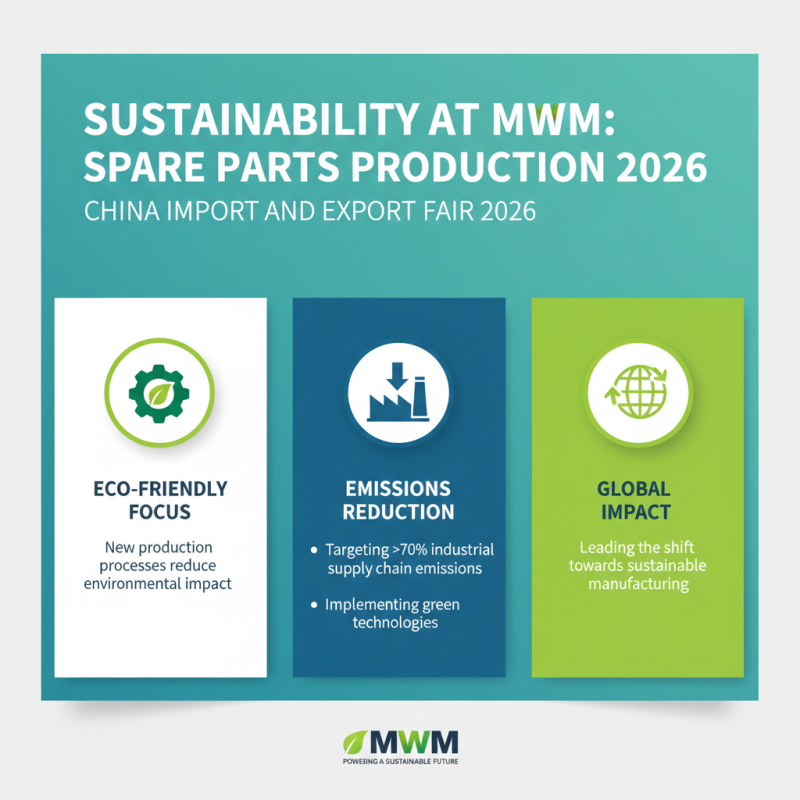
At the upcoming China Import and Export Fair 2026, the spotlight will be on sustainable practices in spare parts production. This trend reflects a growing urgency for manufacturers to reduce their environmental impact. Research indicates that over 70% of industrial emissions arise from the supply chain. Focusing on eco-friendly processes can help reduce these figures.
One area ripe for improvement is the production of generator parts. Many manufacturers still rely on traditional methods that consume excess energy and materials. Shifting to renewable resources can lessen this burden. For instance, using recycled metals in the production of generator parts not only reduces waste but also cuts costs.
**Tip:** Consider investing in innovative technologies that promote sustainability. Many companies are exploring additive manufacturing. This can minimize material use and enable custom designs. Still, there's a need for greater awareness and training in the workforce to implement these strategies effectively. Balancing sustainability with production efficiency remains a challenge, but it's one worth addressing for a cleaner future.
At the China Import and Export Fair 2026, the spare parts sector is witnessing intense competition. The landscape is evolving with various brands vying for market share. Recent industry reports indicate that the global automotive spare parts market is expected to surpass $500 billion by 2025. This highlights the growing demand and fierce rivalry among leading spare parts manufacturers.
MWM is distinguishing itself in this crowded market. Their focus on quality and reliability sets them apart. However, other brands are not far behind. Many are investing heavily in technology and innovation. As a result, price competitiveness is becoming more crucial. In 2022, over 45% of buyers prioritized cost-effectiveness in their purchasing decisions. This reflects a shift that may require companies to rethink their strategies.
Tip: Evaluate your supplier's reliability. A cheaper option today might compromise quality tomorrow. Diverging from the norm can lead to missed opportunities. Reflect on past experiences. Did low-cost parts meet your expectations? Analyze your choices to make informed decisions.
As the world approaches the China Import and Export Fair in 2026, interest in spare parts continues to rise. Experts project a significant growth in demand for these components. This trend is driven by technological advancements and a growing emphasis on sustainability. Industries are eager for efficient solutions to enhance their operations.
Post-2026, the expansion of spare parts markets looks promising yet complex. Increasing competition may lead to price fluctuations. Quality concerns also need addressing. Many manufacturers will face pressure to innovate. They must balance steady production with eco-friendly practices. The challenge lies in meeting customer expectations while adapting to new regulations.
Moreover, companies may struggle with supply chain disruptions. The need for reliable logistics is paramount. Investing in local manufacturing could be a strategy to mitigate risks. However, this approach demands careful planning and resources. Without addressing these challenges, growth projections may fall short. The path ahead is filled with potential but requires thoughtful navigation.
: The global spare parts market is projected to grow at 5% annually.
About 30% of suppliers are experiencing delays in production and inventory issues.
Manufacturers are increasingly adopting eco-friendly processes to reduce their environmental impact.
There’s concern that eco-friendly materials may jeopardize product quality while pursuing sustainability.
Demand growth is anticipated, but competition may lead to price fluctuations and quality issues.
Investing in local manufacturing may be a viable strategy to reduce logistics risks.
Many traditional methods consume excess energy and materials, indicating room for improvement.
Technologies like additive manufacturing can minimize material waste and enable custom designs.
There’s a lack of awareness and training needed to implement sustainable strategies effectively.
Manufacturers must meet evolving regulations while balancing production efficiency and sustainability.
The article "Mwm Spare Parts Highlights at China Import and Export Fair 2026" provides a comprehensive overview of the significance of Mwm Spare Parts in the automotive sector. It explores key trends in the spare parts market, highlighting innovations in technology that enhance performance and efficiency. Furthermore, it includes a market analysis that indicates a growing demand for Mwm Spare Parts in the Asia-Pacific region, acknowledging shifts towards sustainability practices in production methods.
Additionally, the article delves into the competitive landscape, comparing Mwm Spare Parts with other leading brands and outlining future growth projections following the 2026 fair. The insights presented reflect the evolving dynamics of the spare parts market and position Mwm Spare Parts as a pivotal player in driving advancements and meeting market demands.